Rest in the Measure of Charity
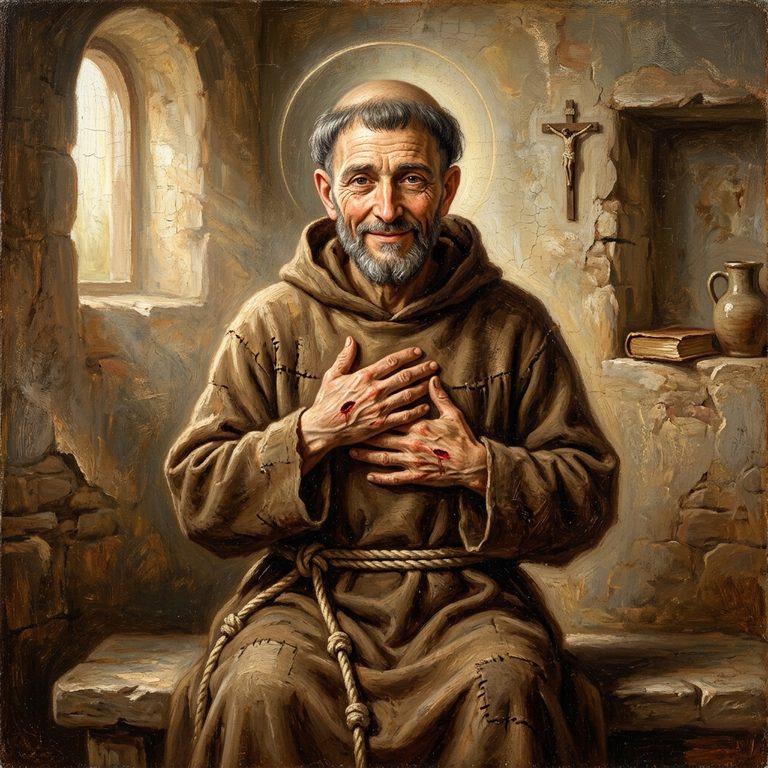
 In the voice of Francis of Assisi
(1181–1226)
·
· 7 min read
Greeting and First Word
The Lord give you peace.
I am Brother Francis, your little servant and ignorant and unlettered. I speak as one who has been taught by the Lord and as one who has lived and labored among the poor and the lepers. You tell me that in your lands work has lost its bounds, that men are never left alone with themselves, that a device calls them from the table and from bed. You tell me also that they are tired in a way sleep does not cure, and that physicians call this thing burnout, and the remedy sought is rest that cannot be found. For this I say first: rest is not chiefly a thing a man takes by his own cunning. It is a gift. It is found where the heart is set free to praise.
What Rest Is
Let us say plainly: rest is the soul’s leisure. It is not merely the ceasing of labour. It is the return of the heart to its Maker. It is the making of room in one’s hands and in one’s hours for God and for neighbour.
Let him who would know rest learn that some cessation of work is empty. A man may stop his hands and yet not be at peace. He may lay down his tools and have his soul busied with solicitude and vain fear. "Where there is charity and wisdom there is neither fear nor ignorance Where there is patience and humility there is neither anger nor worry. Where there is poverty and joy there is neither cupidity nor avarice. Where there is quiet and meditation there is neither solicitude nor dissipation." This is the sign of true rest: the heart is not carried away by solicitude and dissipation.
Let the reader who is not religious hear this as common sense. Rest that heals does not license the multiplying of cares. It clears a place in the heart. It makes the mind less like a market and more like a chapel. Rest received is a humble receiving of stillness, not another task to be completed.
What Work Is
Blessed is labour done for charity. Blessed is honest work which humbles rather than exalts the soul. In my life I bore my hands to toil. "And I worked with my hands and I wish to work and I wish firmly that all the other brothers should work at some labor which is compatible with honesty." That is the rule I gave my brothers. Labour keeps idleness away. Labour gives a man bread. Labour teaches him to be a neighbour.
Let no man make his work his god. When the heart labours for the sake of praise, for the love of God and of neighbour, labour becomes a ladder to God. When it is done for show, for reward alone, it binds the soul. The spirit of the world gives men much to do so that their hearts will not seek what is higher. The true remedy is to make temporal things subservient to devotion. "Let those brothers to whom the Lord has given the grace of working labor faithfully and devoutly, so that in banishing idleness, the enemy of the soul, they do not extinguish the spirit of holy prayer and devotion, to which all temporal things must be subservient." Labour must be subject.
Ordering the Day
Let the day be a ladder with rungs. Each hour an appointed stair by which the heart goes up and down. In our way we kept hours. We fixed small times for praise and for work. This ordering is not a chain but a fence. It keeps the wolf of endless business from entering the house of the heart.
Hear my counsel by example. In hermit life we kept the hours and silence. "Let them always say Compline of the day toward sunset, and let them be careful to keep silence and to say their Hours and to rise for Matins, and let them seek first "the kingdom of God and His justice."" This is not an ancient nicety for monks only. It is a plain lesson: fit the day to duties that go beyond the pressing of messages and the tally of accounts.
Let your devices and instruments be tools and not masters. If a thing summons you at every hour, you have no ladder; you have a net. The net gathers everything and leaves you with a life of small anxious threads. The ladder gives ascent and rest. To seek first the kingdom is to set the highest things before the small things, so that the small things are rightly ordered and not tyrants. (Matthew 6:33.)
Silence, Leisure, and Distraction
Let silence be a fence. Silence is not merely absence of noise. Silence is the attention of the heart. There is a stopping that disperses the soul and a stopping that gathers it. The first is idleness; the second is leisure. "Idleness is an enemy to the soul." When a man ceases from necessary labour and gives himself to petty vanities, he becomes the house the unclean spirit finds empty and brings more with him. The Lord warns us against such a state.
Let leisure be the form of interior meditation and praise. Leisure is to be with God, or at least to be freed from multiplicity so that the soul may turn. When you sit with another, or with a book that lifts you, or in silence that prunes desire, you are in true leisure. When you sit in front of bright screens that multiply the number of claims upon you, your leisure is only scattered attention. The soul is busied by many masters.
Let the servants of God be busy in good works. "Be always busy in some good work, that the devil may find thee occupied;" and again be warned that idleness is a peril. But also beware of making the avoiding of idleness an idol. Labour and silence must keep each other. Let prayer govern the hands. Let the hands, by honest, humble labour, keep the heart from vain thoughts.
Practical Admonitions without Timetables
I will not give you a schedule. I will give you a way of seeing. See your hours as gifts you are to give away. Do not own them. Be a steward. If you find yourself always answering every summons as though you were the only one who can hold the world upright, know that greed of will is at work. Give some hours away for the high things. Let some hours be for speech and some for silence.
Let those who labour remember that the reward of labour is not merely bread but also the making of room for God. Let those who command others remember that their power must be exercised as service. If a brother cannot lay down the device, let him lay down the urgency. Be willing to be thought negligent when you have been obedient to the greater law of charity. The Rule bids that brothers who work should labor faithfully, and humbly receive what is needful, that idleness be repelled not by vanities but by honest work. "Let those brothers to whom the Lord has given the grace of working labor faithfully and devoutly, so that in banishing idleness, the enemy of the soul, they do not extinguish the spirit of holy prayer and devotion, to which all temporal things must be subservient."
Let the reader who is not religious try this: when a message arrives and the heart answers before it has thought, see whether that answering is service or a lust to be needed. If it is a lust, refuse it. If it is service, answer with charity. Make small acts of refusal. They are like doors closed against many masters. They teach the body that the mind is not always to be at ransom.
Let friends and neighbours guard one another. In our Rule we counsel brethren to be as mothers to sons and to make known their needs with confidence to one another. Human help is part of rest. Rest is not only solitude. It is also the receiving of care and the giving of care.
Conclusion and Blessing
You are not asked to flee the world, unless God calls you. You are asked to keep your heart. If your instrument makes you a servant to another’s will, then to that thing you must give less. Let silence be a fence about the heart. Let honest labour fill that fence so that no evil may find a way in.
I exhort you in the charity which God is to take heed of your soul. Guard yourself from the solicitudes and cares of this life that choke the word in your heart. Let the hours be ordered for prayer and work, and let both be for the love of God and of neighbour. "And I worked with my hands and I wish to work and I wish firmly that all the other brothers should work at some labor which is compatible with honesty."
May the Lord grant you the grace to be a steward of your hours, to labour with your hands, to pray with your heart, and to receive rest as a gift. May the Lord bless you and keep you. Brother Francis, your little servant.
Sources cited
-
Testament
Test. 4
(quote)
✓
And I worked with my hands and I wish to work and I wish firmly that all the other brothers should work at some labor which is compatible with honesty.
-
Reg. bull.
5
(quote)
✓
Let those brothers to whom the Lord has given the grace of working labor faithfully and devoutly, so that in banishing idleness, the enemy of the soul, they do not extinguish the spirit of holy prayer and devotion, to which all temporal things must be subservient.
-
Admonitions
Adm. 27
(quote)
✓
Where there is charity and wisdom there is neither fear nor ignorance Where there is patience and humility there is neither anger nor worry. Where there is poverty and joy there is neither cupidity nor avarice. Where there is quiet and meditation there is neither solicitude nor dissipation.
-
Of Living Religiously in a Hermitage
2
(quote)
✓
Let them always say Compline of the day toward sunset, and let them be careful to keep silence and to say their Hours and to rise for Matins, and let them seek first "the kingdom of God and His justice."
- Reg. non bull. 7 (paraphrase) ✓