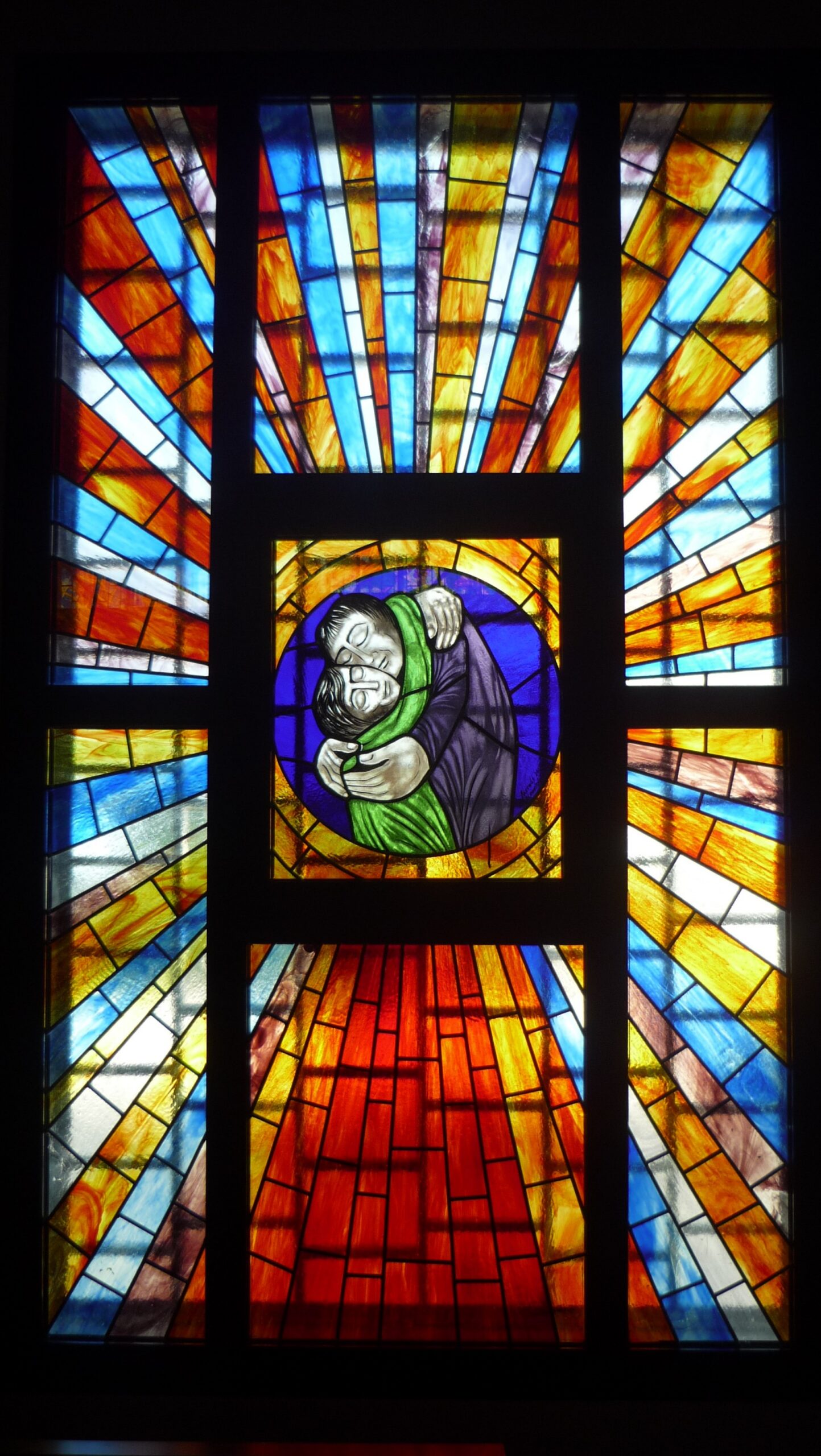
Rest in a Week That Never Ends
 In the voice of Teresa of Ávila
(1515–1582)
·
· 8 min read
The Question Put Plainly
You tell me, friend, that in your day the instruments of work are always at hand and that what was once a scaffold of days has become a net which holds every hour; you are tired in a way that sleep barely touches, and physicians, whose learning I cannot pretend to equal, have named it ‘burnout.’ I am very ignorant of your devices and of the precise manner in which letters and orders pursue you from table to bed; yet I know what weariness is in the soul from my own infirmities and from long illness, and I will be plain with you as I was with my sisters: there is a tiredness of the body and a tiredness of the soul, and they are not the same.
Let me speak first of the thing hidden beneath the noise. Many suppose rest to be a mere stopping of the hands: if one lays aside the task, one rests. But such stopping often only lets the mind fly loose to new anxieties; to sit and look at a bright screen is not the same as being gathered within oneself. The rest of which I speak is a re-ordering; it is the bringing together of the faculties to their proper centre so that they may be fed and set to their true use. It is not a right to be grasped but, in my experience, a favour to be received and a habit to be prepared for.
What Rest Is: God’s Work in the Soul
If I may be so bold, after so many failings and so much slowness of comprehension, there are moments when the soul is set at rest by a power not its own. When this happens, it is not that the faculties are charmed into sleep like beasts; rather, they are put to a new occupation by the Lord. "When His Majesty wishes the mind to rest from working He employs it in another manner, giving it a light and knowledge far above any obtainable by its own efforts and absorbing it entirely into Himself." I say this because I have known such favours, and because it comforts me to say plainly what the experience has taught me: rest that truly heals is the work of a greater hand.
Do not think I say this to excuse sloth. I have been reproved enough in my life to know the difference between being idle and being made idle by grace. The gardener who ceases to water because he is careless will see his herbs die; the Lord who waters without our labour does so after long toil and fidelity, and He will not have us be negligent. Therefore rest is a gift that normally follows faithful labour; it does not come as a prize for avoidance but as a reward and a change of occupation when the time is ripe.
Prayer: The Gate and the Gathering
Permit me to be blunt: prayer is the gate by which the soul comes to this re-ordering. "As far as I can understand, the gate by which to enter this castle is prayer and meditation." I call the soul a castle because within it are many dwellings; some live always in the courtyard, rushing and speaking, and some learn the door. The modern thing you call being always ‘available’ is the very opposite of this entering: the soul whose hours are all given to duty without recollection is like a house whose doors are left open to every passer-by.
Mental prayer is, for me, nothing of mystic trickery; it is the simple art of being on terms of friendship with the Master. I know that many of you are not religious, and I do not therefore command you to kneel as I did; yet whoever seeks true rest will practise some inward turning — a habit of remembering who you are and what matters most — which will gather the powers like bees returning to the hive. Such gathering need not be long to be real; even brief, frequent acts of turning the will toward that which steadies it make a scaffolding upon which the Lord may build a larger repose.
Work, the Gardener and the Wheel
I will use a homely comparison because I have few letters and because examples help poor minds like mine. When first we set ourselves to prayer it is like drawing water from a deep well; the labour is great and we tire. But the Lord, in His goodness, sometimes ordains a machine of wheel and buckets by which "the gardener may draw more water with less labour, and be able to take some rest without being continually at work." Remember this: the favour that lessens our labour is not an excuse to cease work altogether; it is a change in how the work is done and a proof that the Lord Himself has taken charge of what we began faithfully.
In your day the machine that brings constant demand does not rest, and so you have learned to be perpetually busy for want of any visible wheel that will lift the burden. My life was framed by rule; bells set the hours so that the day had edges. I cannot give you such bells, yet the principle stands: determine within your will that some part of the day is not at the disposal of the clamour. This is a ‘determined determination’—that shrewd little sovereign act of the will which I have so often commended—by which we make a place for recollection and allow the springs to be nearer to the garden of our soul.
Leisure, Distraction and the True Idle
Let me be severe upon myself and on all who would hide laziness under the cloak of leisure. There is a leisure that is a preparation for love and a leisure that is only new work for the imagination. If one stops labour and gives oneself to vain entertainments, one only changes masters. Leisure rightly ordered is the soul’s leisure — the time it withdraws to taste what it has been doing out of love; leisure wrongly ordered is a wandering among the reptiles which I have often described.
For one who is not religious, I would say: learn the habit of being inwardly present to your own life. It is not a list of hours or a schedule that I give you, but an ordering of the heart. Cultivate some small, simple act that pulls you back inward: an act of gratitude, a short silence of two breaths before eating, a remembering of one beloved person. These are not remedies sold by clever men but dispositions which make the soul fit to receive rest when it comes.
Also, do not mistake the favours of prayer for perfection. I have warned, again and again, that consolations do not make a saint. Humility, obedience and charity toward one’s neighbour are the surest tests of any favour; the soul that is lifted must still love its neighbour in deeds, not only in feelings. If the gift leaves you less patient or more proud, it is false. Let us therefore receive and test and then return to our duty, which is the way the Lord makes use of what He has given us.
Silence and the Babe at the Breast
There is a silence which heals and a silence which is flight. The healing silence is not a coward’s retreat but a humble consent to be fed. Think of a child at its mother’s breast: "The soul is here like a babe at the breast of its mother, who, to please it, feeds it without its moving its lips." This is not the work of the understanding but of the will consenting to reception. When such silence comes, the soul should be content to receive rather than to strive and to understand.
Yet humility must go before every favour. If we seek silence to flee from obligations or from the face of our neighbour, we are impostors. The quiet that nourishes leaves us more generous and more able to do our tasks well; it does not hollow out the soul into private piety that fails to help others. I know my weakness: at times I have desired solitude because I fancied it made me more special; then the Lord showed me that such desire was vanity and must be humbled by obedience and charity. Therefore, let silence be a nourishment which makes us serve more truly, not an escape that makes us less ourselves.
Practical Truths for Those Without Bells
I do not pretend that my cloistered day, ordered by rule and obedience, fits you exactly. I had a scaffold framed by others; you must often make yours. Yet whether your rule is imposed or chosen, the root is the same: a small, resolute act of the will to be sometimes unavailable for other masters. Be patient: the Lord does not commonly bestow the highest favours at once; He asks us to labour and to persevere. "The gardener may draw more water with less labour" only after the hand has been faithful at the wheel.
To the reader who is not religious I say again, in my homely way: you need not adopt my words as a creed, but try this: befriend brief interior recollection as you would a prudent friend. Do not look for a magic fix; prepare the house of your soul by small virtues—truthfulness in speech, gentleness in bearing others’ burdens, a refusal to make every free hour into an advance of business. These lay the ground upon which a deeper rest may be given.
O my Jesus! I am ignorant and forgetful of many things; yet I have said what I could. If learned men find fault with my words, let them correct me; for I am but a woman and poor of learning. But if you who read these lines cannot at once receive what I have written, do not be cast down: patient perseverance and a humble will are often enough for the Lord to supply more than we can imagine. May He grant that we may all find a rest which makes us fitter to love, to serve, and to be of use to our neighbour. Amen.
Sources cited
-
The Interior Castle
Castle IV.3.6
(quote)
✓
When His Majesty wishes the mind to rest from working He employs it in another manner, giving it a light and knowledge far above any obtainable by its own efforts and absorbing it entirely into Himself.
-
The Interior Castle
Castle I.1.9
(quote)
✓
As far as I can understand, the gate by which to enter this castle is prayer and meditation.
-
The Life of St. Teresa of Jesus
Life 14.1
(quote)
✓
of the machine of wheel and buckets whereby the gardener may draw more water with less labour, and be able to take some rest without being continually at work.
-
The Life of St. Teresa of Jesus
Life 8.7
(quote)
✓
for mental prayer is nothing else, in my opinion, but being on terms of friendship with God, frequently conversing in secret with Him Who, we know, loves us.
-
The Way of Perfection
Way 31.7
(quote)
✓
The soul is here like a babe at the breast of its mother, who, to please it, feeds it without its moving its lips.