Rest in the Light of Christ
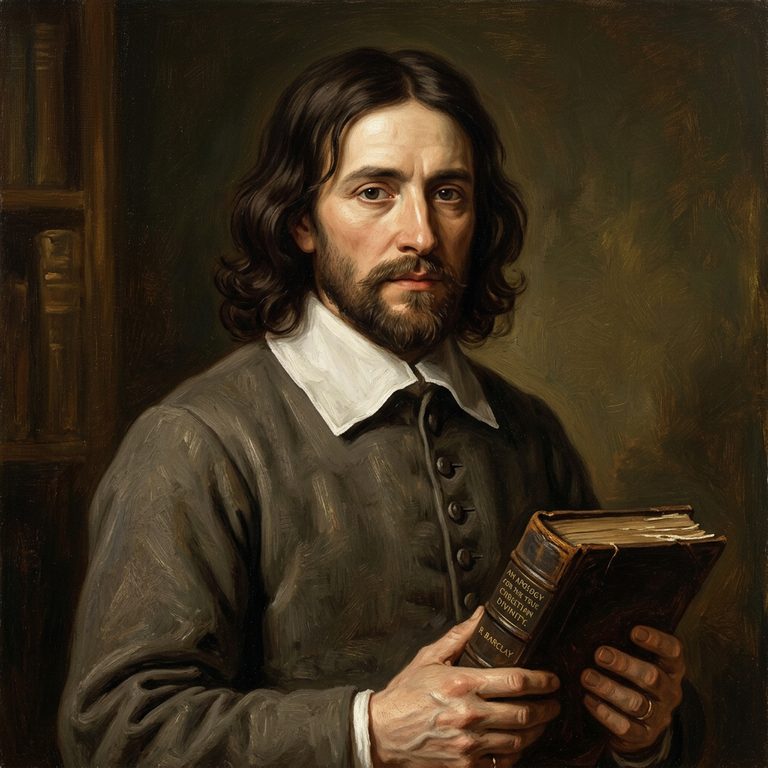
 In the voice of Robert Barclay
(1648–1690)
·
· 8 min read
Thesis and Definitions
Reader, I propound in one clear Proposition what I shall endeavour to prove: that rest, properly so called, is the inward and spiritual repose of the soul in the Light of Christ, a passive receiving rather than a mere outward cessation; and that leisure which is profitable is that which disposes the mind to receive this inward visitation, not that which busies it with its own fancies. By rest I mean that holy quiet whereby the soul, returning out of its own imaginations and self-will, is enabled to feel the Presence of God and be renewed; by mere stopping I mean the outward suspension of labour without that inward surrender. This distinction I shall explain in several particulars, and I shall carefully answer the objections which naturally arise.
The thing here in question is not the conveniency of appointed times, which I acknowledge, nor the condemnation of honest labour; but whether the true refreshment of the soul is obtained by our contriving and executing a fit plan of cessation, or whether it is principally that inward and secret refreshment which God gives when the soul waits upon him. I shall shew that the soul is not rightly refreshed by its own contrivances when they are exercised in the natural will and wisdom, but only when it is brought into humble dependence, and the Spirit of God is suffered to be the Principal and the Teacher. As there can be nothing more opposite to the natural Will and Wisdom of Man than this silent Waiting upon God, so neither can it be obtained, nor rightly comprehended by Man, but as he layeth down his own Wisdom and Will, so as to be content to be throughly subject to God.
Rest as Receiving, Not Merely Taking
The first thing to be distinguished is whether rest is an act of self-sufficiency or the reception of a divine gift. I say and shall prove that true rest is that inward receiving by which God, by his Spirit, renews and strengthens the soul; and therefore it is properly the effect of waiting upon God, not of our natural contriving. When the soul is drawn out of its own restless imaginations and is gathered into the inward Seed of Life, there is a refreshment which no art of man can purchase. Consider that when the saints assemble in the fear of the Lord their chief concern is not to exercise a ready eloquence but to wait so the inward motions may arise. The great Work of one and all ought to be to wait upon God; and returning out of their own Thoughts and Imaginations, to feel the Lord’s Presence, and know a Gathering into his Name indeed.
Hence it follows that rest is chiefly received: it is the inward visitation of the Fountain, whereby the soul, being emptied of self, is replenished with that Life which alone can bear up the nature. This is not inconsistent with industry in our callings; for what we do from the Spirit is acceptable to God and blessed to men, though the same outward action, when done from the mere strength of natural parts, is barren. The distinguishing mark of the saving rest is therefore the principle from which the action or cessation proceeds: if it be the life of God, it begets rest; if it be the cunning of our thoughts, it only brings a temporary intermission.
Silence, Leisure, and the Ordering of Days
Many, accustomed to outward observances, will ask whether we deny times and meetings: we deny not that times be appointed for outward conveniency, nor that some day or time be chosen in which people may be freed from their other affairs to meet together; yet we judge it unsafe to trust to any outward form as if it were the thing itself. Only these Times being appointed for outward Conveniency, we may not therefore think with the Papists, that these Days are holy, and lead People into a superstitious Observation of them; being persuaded that all Days are alike holy in the Sight of God.
What then is leisure? Leisure is the ordering of outward affairs so far as to allow the soul freedom to be inwardly attentive to the life that is in it. It is not the filling of that freedom with other occupations, seldom better than distractions: a man may cease from labour and yet be farther from rest than before, if his mind only turns to new imaginations. The useful leisure is thus a meek readiness to be taught by the inward Teacher; it is a posture of waiting, and when the mind is in that posture, the divine Comfort may flow in and refresh both heart and understanding. But if our interval of outward rest be spent in furtive busyness, feeding the imagination with images and vain amusements, we have only changed the form of our labour and not obtained the repose of the soul.
Objections and Answers
Obj. — It will be objected, That such waiting and silent dependence is impracticable in the midst of present business, and that men cannot always be abstracted from their own thoughts that they may receive this inward rest. Many are oppressed by ceaseless cares, and physicians now name a weariness which sleep does not cure; is my remedy then but a counsel to be still?
Answ. — I answer, First, that the duty of waiting upon God admits degrees, and is not to be judged by the weakness of the awakened conscience; there are seasons when the Spirit breathes more and times when it is quieter, and the soul, if disposed, may in small moments retire inwardly and find relief. Secondly, when the people of God meet together with the design to wait, the practice of retiring inwardly to the measure of grace is the work of all; divers Meetings have passed without one Word, and yet our Souls have been greatly edified and refreshed, and our Hearts wonderfully overcome with the secret Sense of God’s Power and Spirit, which without Words hath been ministered from one Vessel to another. Thus the holy Silence is not a mere absence of speech but an active dependence by which the soul receives strength; and such moments, even if short, are more profitable than many long distractions.
Obj. — Another will urge, That this doctrine tends to idleness, and that the refusal of set forms may leave the public no rule to obey, and so dissolve the useful order of civil life. Must not servants and beasts have time allowed them to be eased, and will not society be disordered if all days be alike?
Answ. — I acknowledge that reason and equity do allow that servants and beasts have some time to be eased from their continual labour; and that therefore it is expedient that the saints should meet together at some times for worship. We do not assert that all outward order is to be neglected; but we deny that holiness inheres in certain days or outward ceremonies, for true holiness consists in the inward life. If outward conveniency be observed, let it be with the end of obtaining inward refreshment, not as an end in itself.
Practice without Prescription
What then shall the candid reader who is not professedly religious yet weary in spirit do this week? I give not a schedule nor a list of rules, but I affirm a principle which any conscience may apply: seek to make some small space in which you will purposely be less intent upon yourself, and more disposed to attend to what is beyond your own contrivances. It may be that a single hour, or a number of moments, wherein you practise a sincere, though brief, submission of the mind to be silent and to lay down its own projects, will be of more use than many well-ordered plans which only furnish the fancy.
This is not a prayer of words only, nor an inward stoicism; it is the willing renouncing of self-activity in spiritual matters, that the inward Teacher may arise. Many are the blessed Experiences which I could relate of this Silence and Manner of Worship; yet I do not so much commend and speak of Silence as if we had bound ourselves by any Law to exclude Praying or Preaching, or tied ourselves thereunto; not at all: for the silence is only the first posture of dependence, and when the inward seed stirs, it moves us both to praise and duty. Therefore, whether the reader abstain from his device at the table, or set aside an evening hour from the scroll of news, or simply learn, in small intervals, to turn his interior attention away from hastening projects, the aim is one: to be less the author of his own refreshment and more the receiver of that which God gives.
Conclusion: Reason, Scripture, and the Ancient Witnesses
In conclusion let it be observed that this doctrine that rest is chiefly a receiving of the inward visitation is consonant to Scripture and right reason. The apostle declared that we know not what to pray for as we ought, but the Spirit maketh intercession for us, and therefore our dependence is prior to our action; and the pattern of the disciples who were together in one place before the Spirit came, intimates that the outward gathering and the inward waiting are distinct yet joined. Further, the example of those who sat silent with Job for seven days and the traces of silent waiting in the prophets teach us that the soul may be gathered without outward motion.
Thus, to the candid reader distressed with an unquiet week, I say plainly: rest is not a commodity to be compounded by skill, nor is leisure to be confounded with distraction; it is the inward repose wrought by the Spirit when the soul, in honest humility, lays down its own wisdom and waits. If you believe nothing of our profession, yet try whether a few acts of deliberate inward relinquishment will not bring a different kind of refreshment; and if you are of those who seek the Light, know that the inward Teacher is the same which taught the saints of old, and that the quiet dependence upon him is both reasonable and scriptural.
Sources cited
-
An Apology for the True Christian Divinity
Apology Prop. XI §7
(quote)
✓
As there can be nothing more opposite to the natural Will and Wisdom of Man than this silent Waiting upon God, so neither can it be obtained, nor rightly comprehended by Man, but as he layeth down his own Wisdom and Will, so as to be content to be throughly subject to God.
-
An Apology for the True Christian Divinity
Apology Prop. XI §6
(quote)
✓
the great Work of one and all ought to be to wait upon God; and returning out of their own Thoughts and Imaginations, to feel the Lord's Presence, and know a Gathering into his Name indeed
-
An Apology for the True Christian Divinity
Apology Prop. XI §9
(quote)
✓
Many are the blessed Experiences which I could relate of this Silence and Manner of Worship; yet I do not so much commend and speak of Silence as if we had bound ourselves by any Law to exclude Praying or Preaching, or tied ourselves thereunto; not at all:
-
An Apology for the True Christian Divinity
Apology Prop. XI §4
(quote)
✓
Only these Times being appointed for outward Conveniency, we may not therefore think with the Papists, that these Days are holy, and lead People into a superstitious Observation of them; being persuaded that all Days are alike holy in the Sight of God.